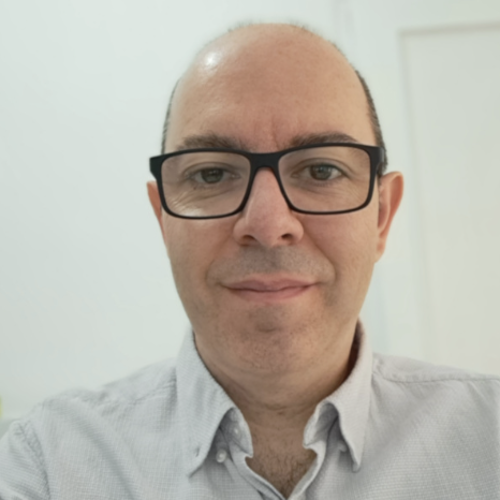
FRANCISCO MIGUEL
MONTENEGRO MONTES
Investigador postdoctoral
Departamento: Física de la Tierra y Astrofísica
Facultad: Ciencias Físicas
Grupo de investigación: Grupo UCM de astrofísica instrumental y extragaláctica
Email: fmontene@ucm.es
Web personal: https://fmontene.denebola.org/


Doctor por la Universidad de La Laguna con la tesis Cuásares emisores en radio con líneas de absorción anchas 2009. Dirigida por Dr/a. Ismael Pérez Fournón, Dr/a. Karl-Heinz Mack, Dr/a. José Ignacio González Serrano.
Desde 2021 disfruto de un contrato María Zambrano para la atracción de talento en la Universidad Complutense de Madrid (UCM). Formo parte del grupo de Astrofísica Extragaláctica e Instrumentación Astronómica (GUAIX) de la UCM, donde participo en varias líneas de investigación, principalmente relacionadas con la instrumentación. En primer lugar, contribuyo al diseño y la definición del plan de operaciones del instrumento TARSIS, y lidero los estudios para la optimización de las estrategias de observación y la programación de objetivos con una técnica novedosa basada en IA. Pertenezco además al Instituto de Física de Partículas y Cosmos (IPARCOS), donde sirvo como miembro del Comité de Estrategia Científica. En la UCM, he participado como profesor en el programa de Máster de Astrofísica y he supervisado a estudiantes en sus trabajos de fin de máster. También soy mentor voluntario de estudiantes de secundaria interesadas en disciplinas STEM. Anteriormente, trabajé durante 7 años en el Observatorio Europeo Austral (ESO) como Jefe del equipo de Operaciones Científicas del Observatorio APEX en Chile. Era responsable del rendimiento del observatorio y de liderar las actividades del equipo de Operaciones. En 2017, transitamos a un esquema de operaciones remotas las 24 horas, y desempeñé un papel importante en su diseño e implementación. También fui miembro del panel del Comité de Asignación de Tiempo de APEX para tiempo chileno y revisor experto invitado para la National Science Foundation (NSF). Desde 2021, he contribuido a los estudios financiados por la UE para diseñar el futuro telescopio sub-milimétrico de 50 metros, AtLAST, centrándome en el desarrollo del plan de operaciones científicas y contribuyendo a definir sus objetivos científicos. En la actualidad continuamos refinando el trabajo desarrollado hasta ahora y hemos solicitado fondos adicionales de la UE. Para ello, he creado un nuevo nodo UCM que ha sido invitado a convertirse en miembro de pleno derecho en el consorcio. Antes, trabajé durante 6 años como Astrónomo de Operaciones APEX, participando en observaciones científicas y técnicas y en la puesta en marcha de instrumentos. Pasé el 20% de mi tiempo haciendo investigación. Ejemplos son mi participación en la planificación y ejecución del estudio SEDIGISM. Este trabajo dio lugar a varias publicaciones que han permitido el censo y la extracción de parámetros físicos de nubes moleculares. También participé en la preparación técnica y las observaciones con APEX para el Telescopio del Horizonte de Eventos. Estas condujeron a las primeras detecciones directas de agujeros negros supermasivos, un importante hito en astronomía. En mi tesis, estudié la población de cuásares emisores en radio con líneas de absorción anchas (BAL QSOs), abordando la cuestión de su origen como población. Esta fue una línea de investigación novedosa en su momento y la metodología sistemática que establecí fue adoptada más tarde en estudios posteriores centrados en muestras más grandes. Previamente, participé en la caracterización de las fuentes infrarrojas de los principales campos extragalácticos (SWIRE) observados con los observatorios espaciales Spitzer y Herschel. A lo largo de mi carrera profesional, he combinado la producción científica con el desarrollo de habilidades técnicas y de gestión. Soy autor o coautor de más de 25 publicaciones en astronomía y astrofísica de Q1 y he participado en varios comités de evaluación. Tengo experiencia en gestión de proyectos y personal, y he desarrollado un gran interés en la aplicación de técnicas de aprendizaje automático e IA en operaciones e investigación.